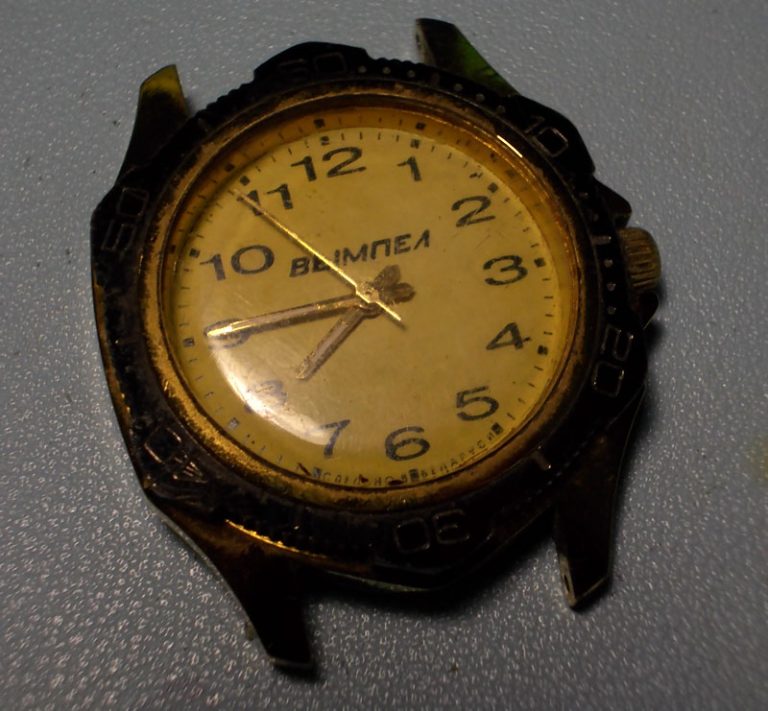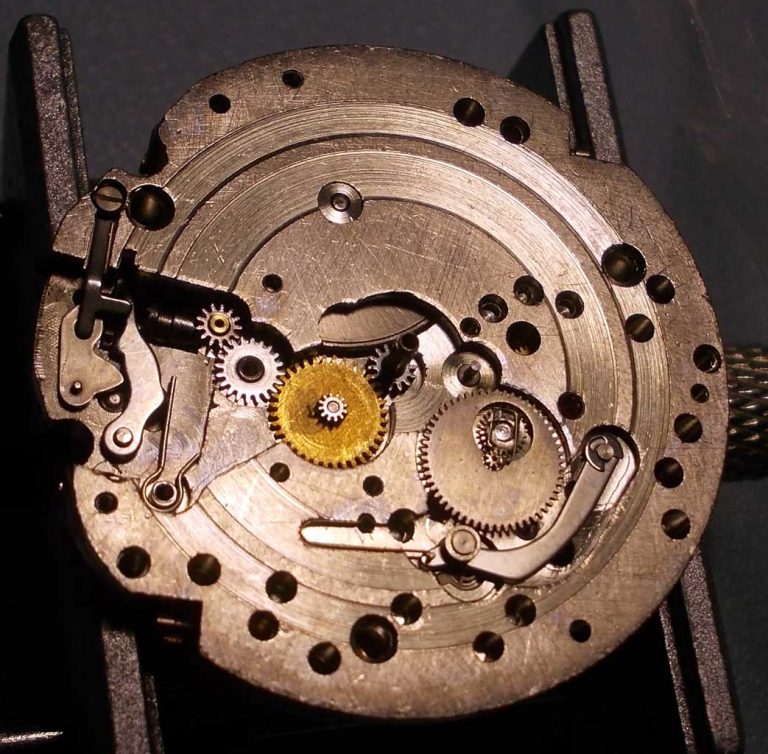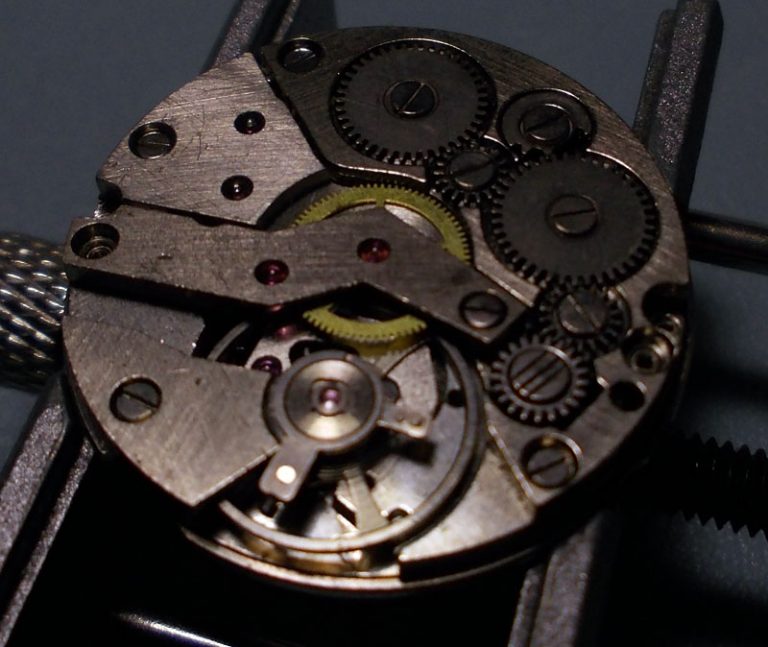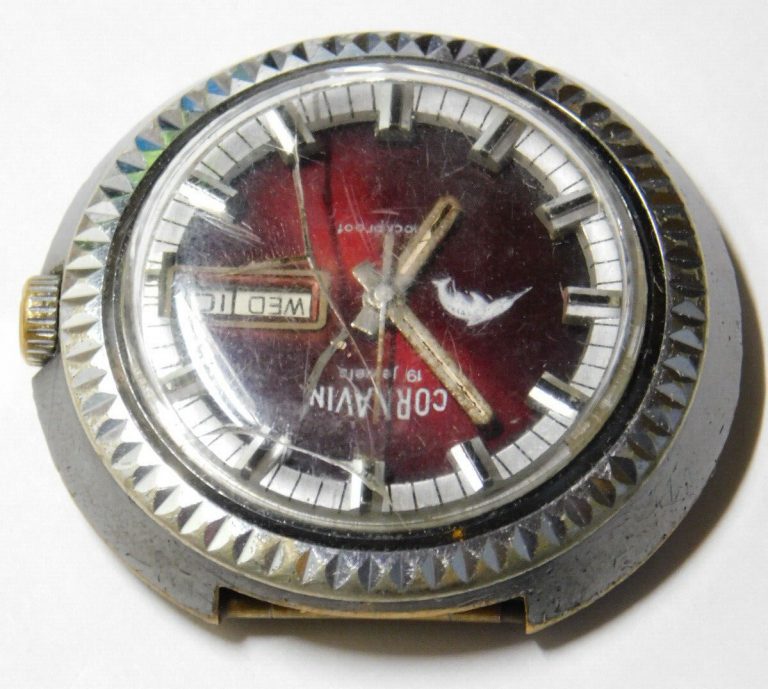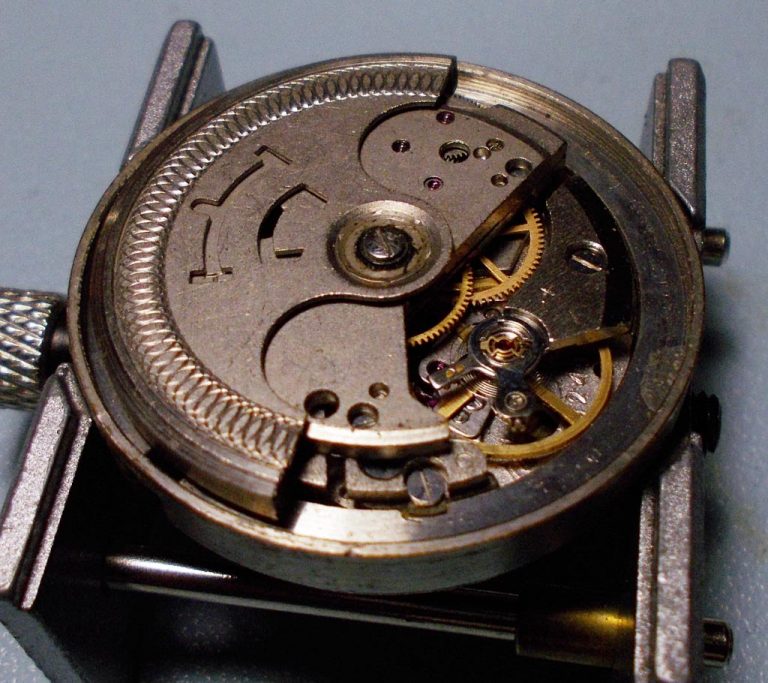
These are some photos from my first servicing of a HMT 17 jewel watch movement.
HMT (Hindustan Machine Tools) is an Indian brand that once held the title of “Timekeeper to the Nation.” The parent company was founded in 1953 as a public-sector machine-tool enterprise; its watch division came later, set up in 1961 in collaboration with Citizen Watch Co. of Japan, with the first watches reaching buyers in 1962. HMT is credited as India’s first indigenous watch venture; early pieces were largely assembled from Citizen components before production was progressively localized, and the brand quickly became a symbol of national pride and industrial self-reliance. Iconic hand-wound models like the Janata, Pilot, Kanchan, and Rajat were widely popular, often gifted for milestones such as graduations and weddings. At its peak, HMT produced millions of watches annually across multiple factories.
The brand struggled to adapt, though. The rise of quartz, competition from Titan and foreign brands, and slow decision-making led to a steady decline. HMT’s watch division was officially shut down in 2016, and no new mechanical movements have been produced since. Today, HMT watches are assembled from leftover stock and outsourced components under the Auxiliary Business Division in Bangalore.
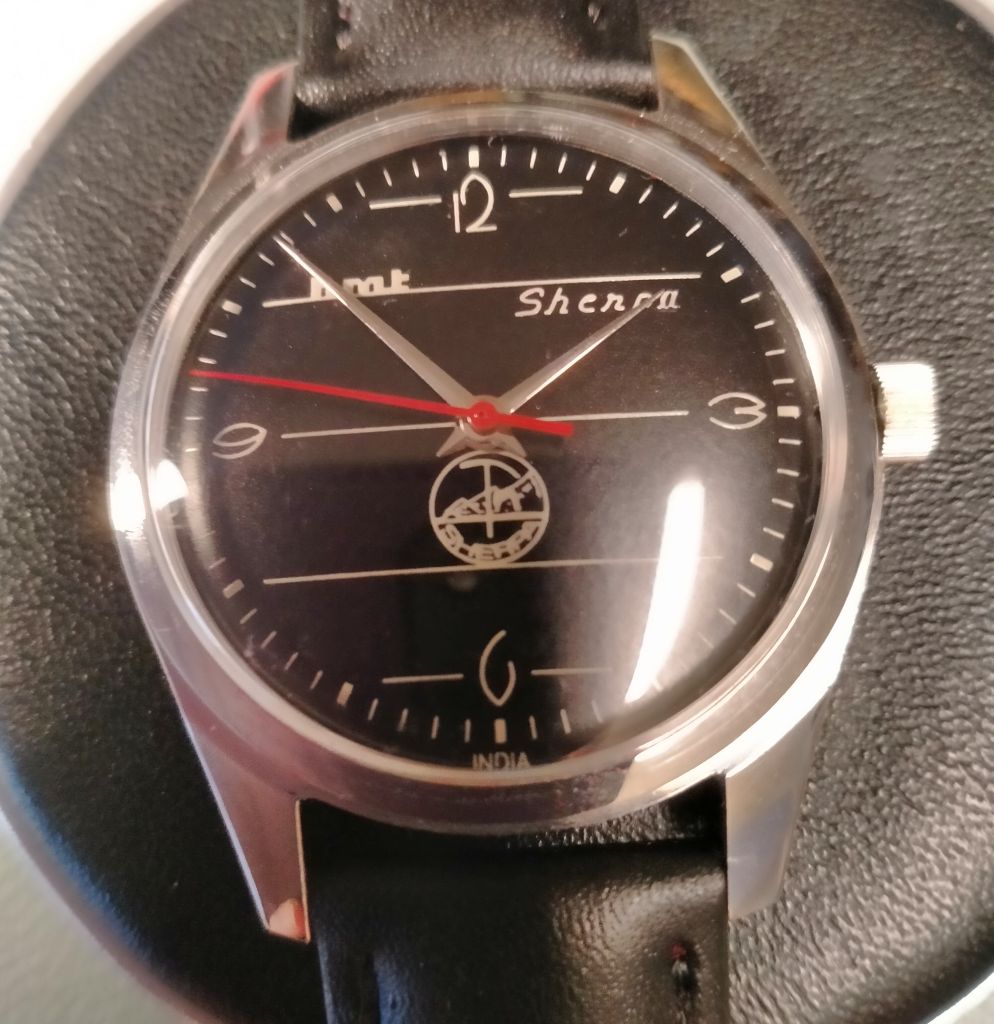
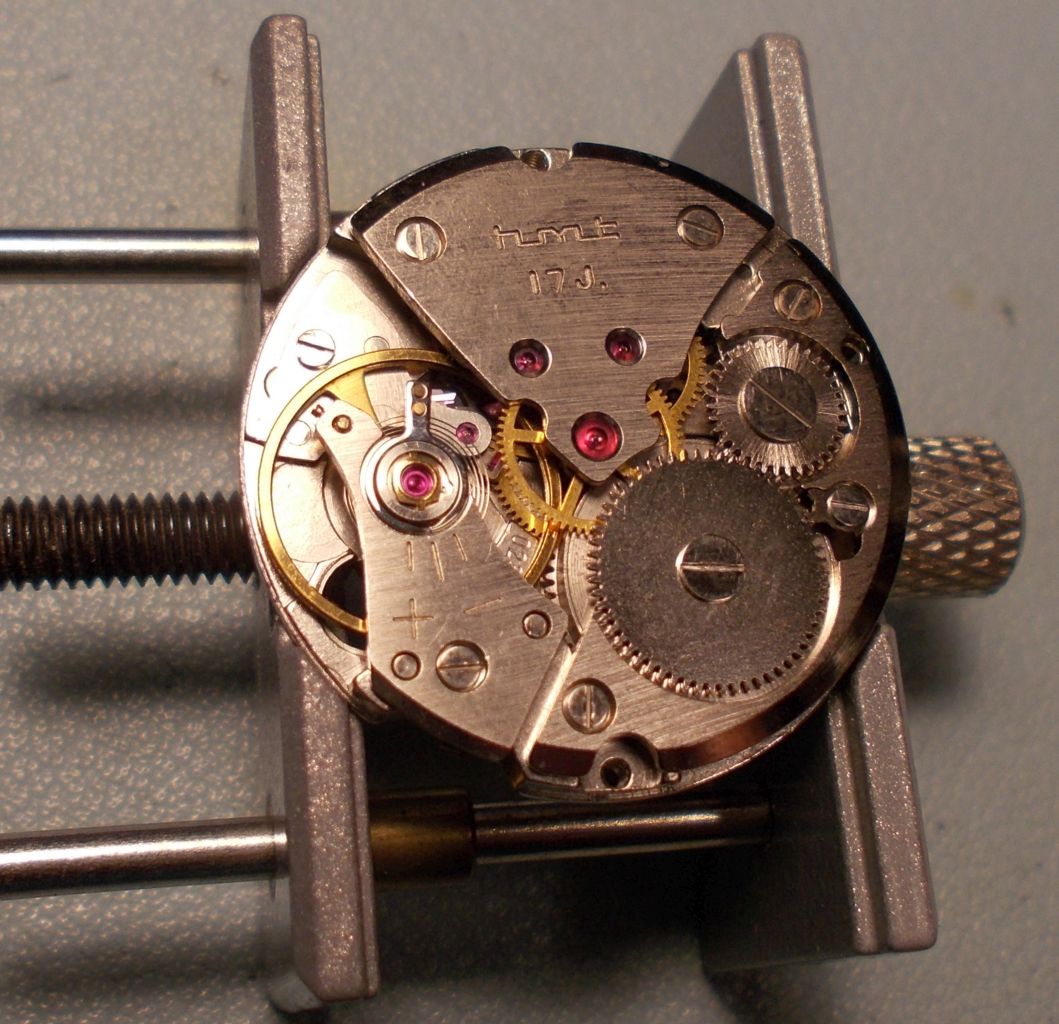
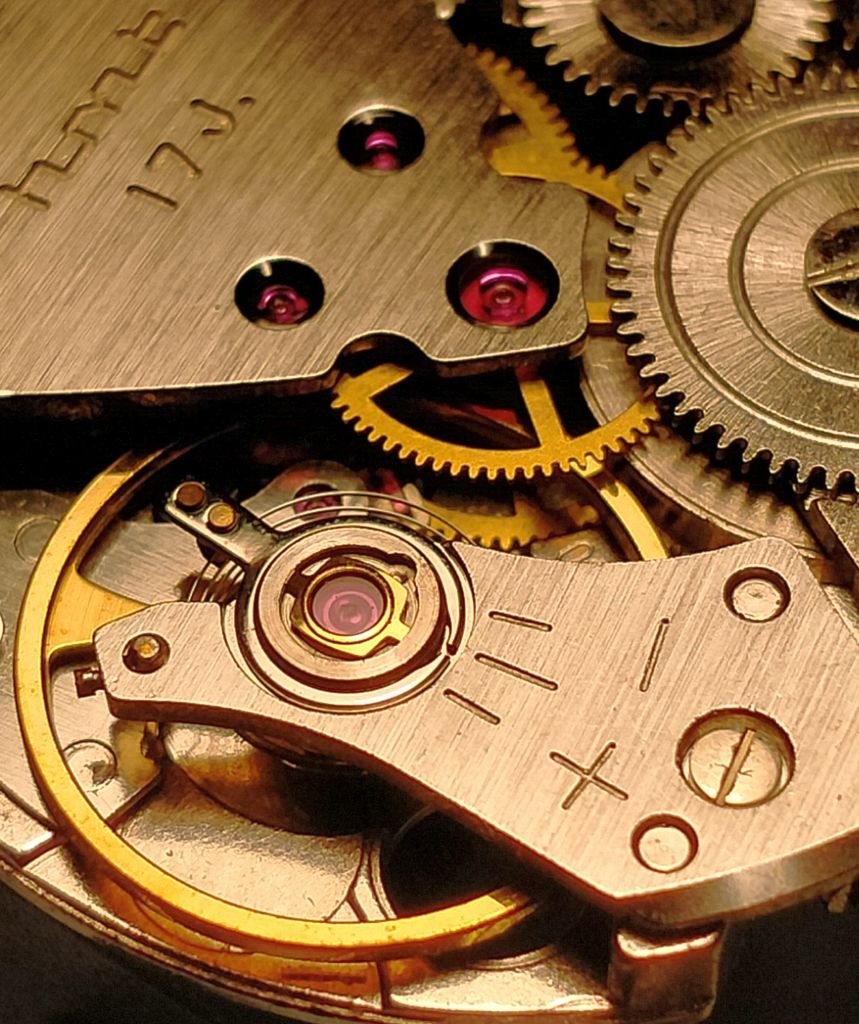
This particular watch is the “Sherpa,” which looks almost identical to the “Janata” but with a screw-down back. It’s a hand-wound movement, no date, no automatic, and as far as I can tell it’s the same base caliber HMT used across the Sherpa, Janata, Sona, and most of their non-date, non-automatic models, descended from the original Citizen collaboration. I didn’t count the jewels myself, but “17 J.” is marked on the movement.
The dial feet are held by 2 very obvious screws at 11 and 5 o’clock. The dial side of the movement is fairly straightforward. There’s a bridge fastened by 2 screws holding everything but the hour wheel in place:
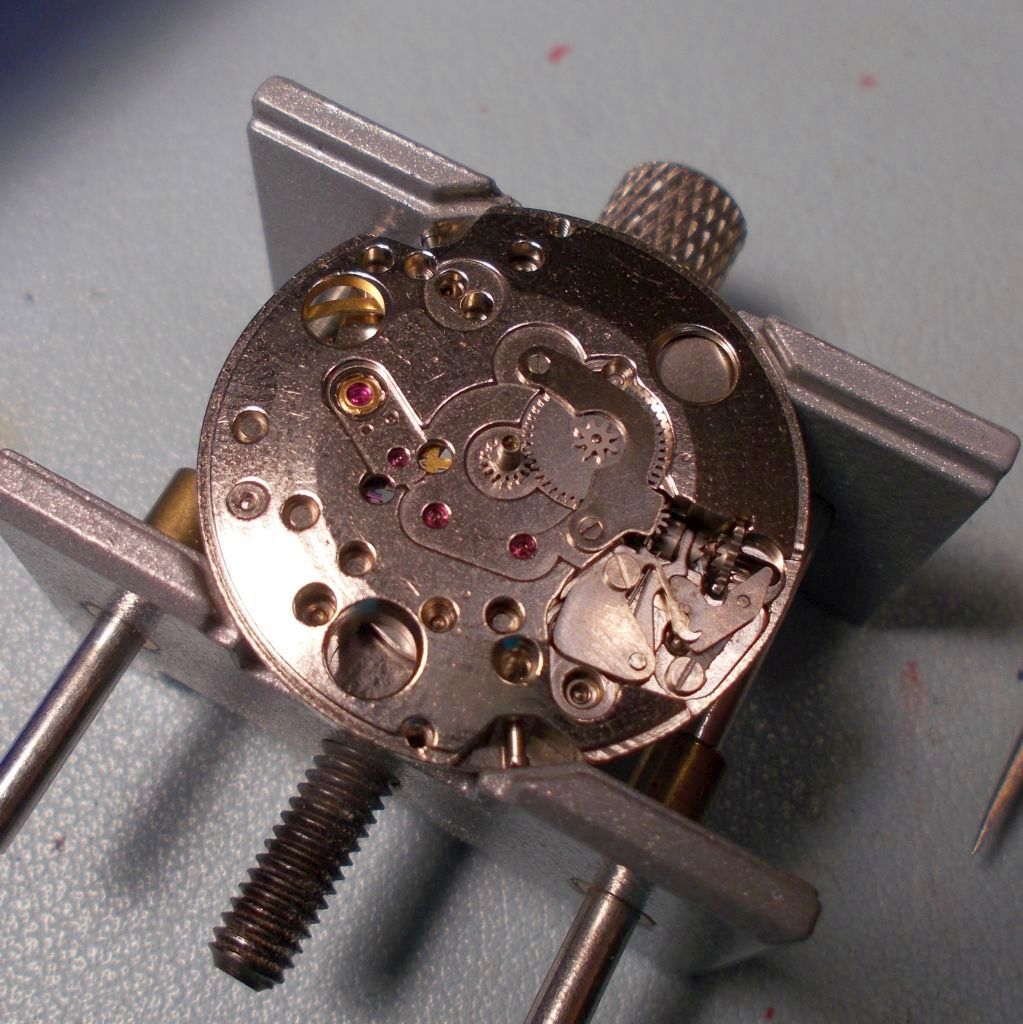
The keyless winding mechanism:

The position of the spring. I hadn’t noticed at this point but the camwheel lever had escaped when I took this picture:

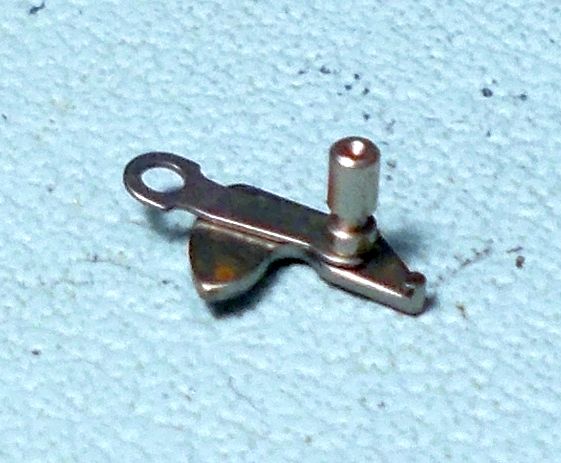
The winding stem retaining unit (these are separate parts so take note of the orientation of the spring fork):
The power side of the watch, note that the mainspring wheel was assembled upside down. The mainspring and winding wheel screws are both counterclockwise, which isn’t really signaled except maybe by their size, though this differs by movement and some do have extra markings on these screws. It is common, but not universal, for both of these screws to be counterclockwise so this is a small gotcha.
The winding wheel consists of 2 parts, the inner being just a little tube:

The click spring is actually under the mainspring wheel:
The underside of the click has a tiny notch that catches on this spring. Reassembling the click was a little tricky…

The main bridge holds the seconds wheel, the escape wheel and the transfer wheel (aka third wheel) in the usual configuration:

Below these is the center wheel bridge:
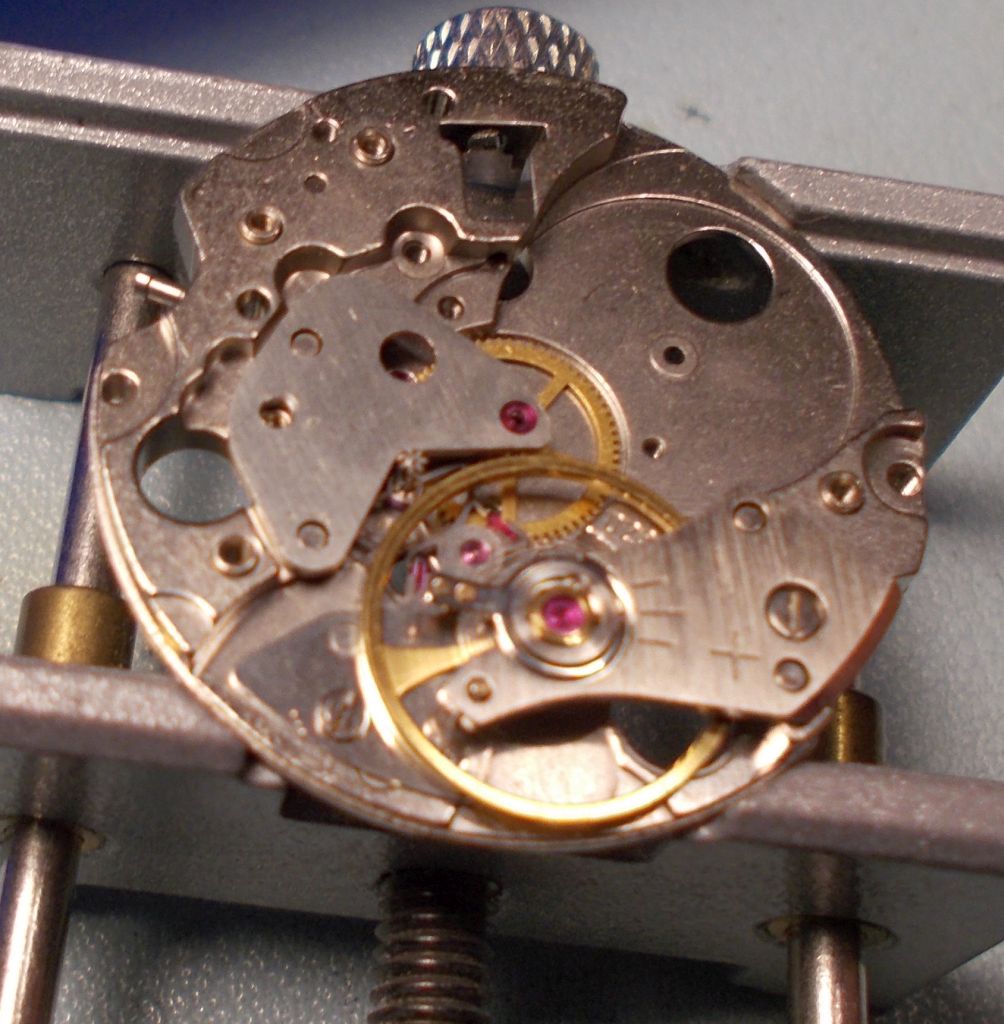
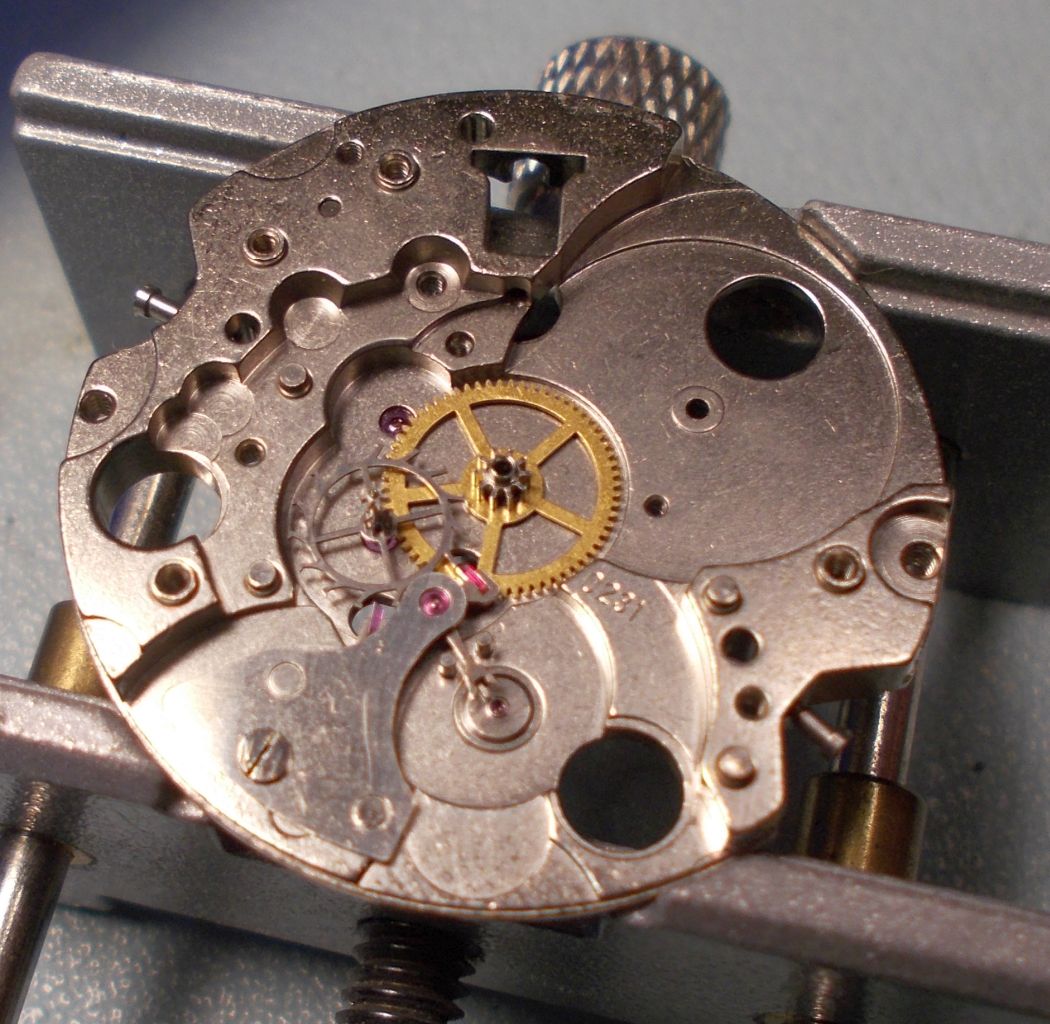
With the balance removed, showing the pallet fork bridge:
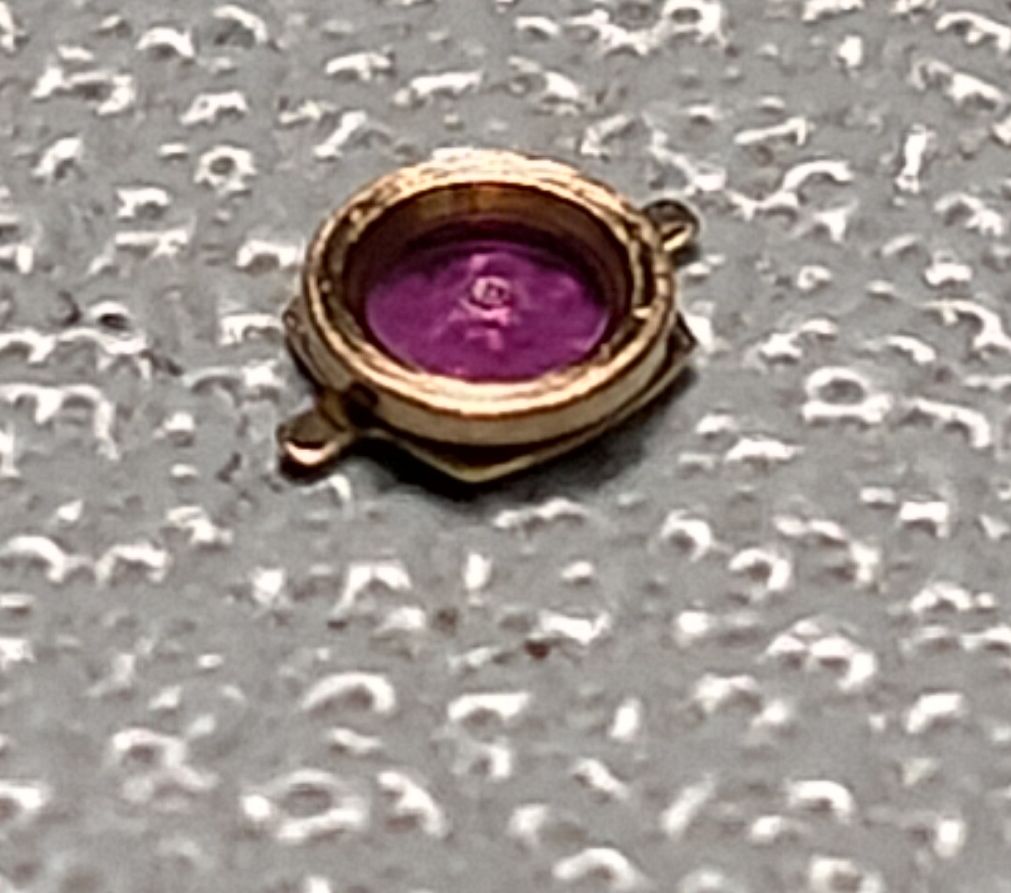
The balance jewels are held in place by a brass ring with 2 tabs, the ring is one unit with the jewel which makes handling these quite easy:
The exterior side has this squarish look:

This is the business side, complete with blob of dried grease in the center:
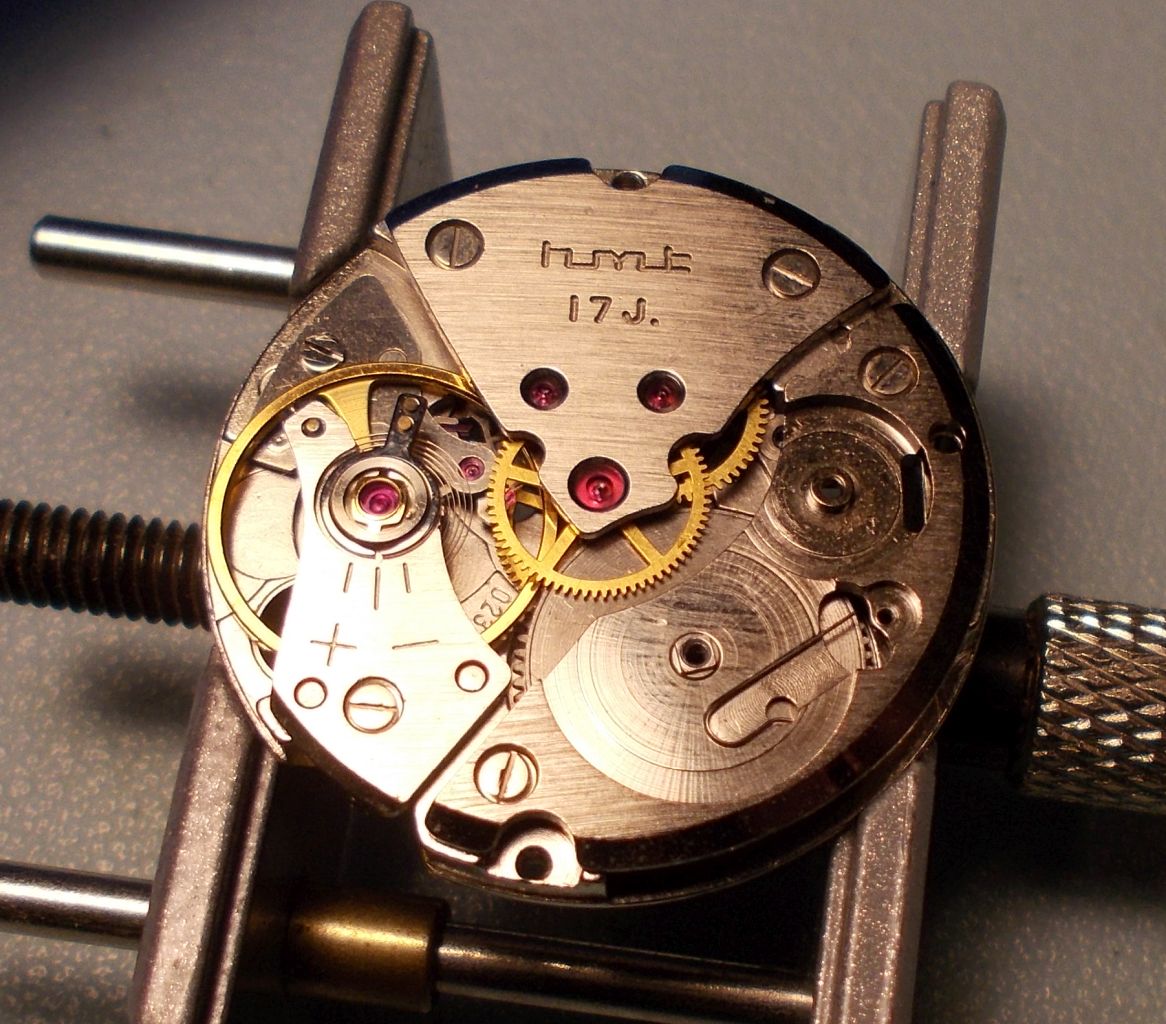
The serviced movement, now with the mainspring wheel right side up:
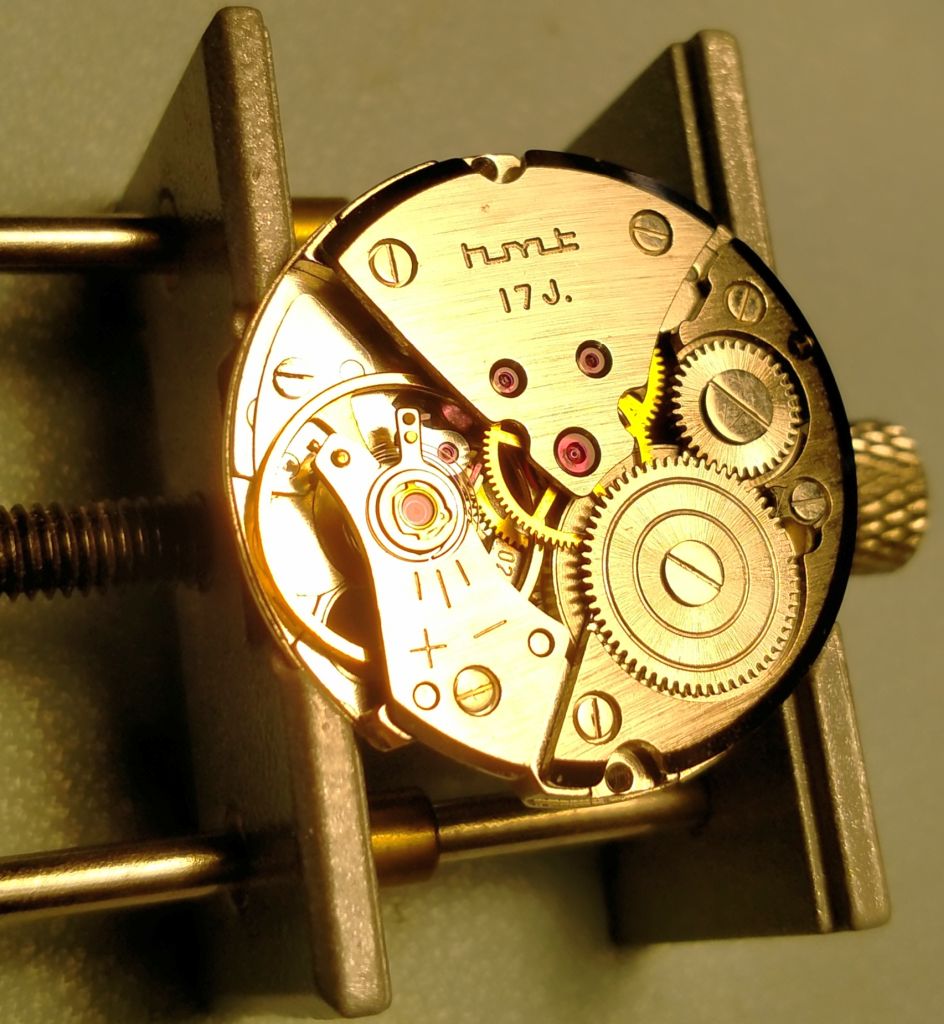
It’s a quite simple, unadorned movement, and was relatively easy to service despite a few potential pitfalls, such as the 2 counterclockwise crews that are not marked as such, and the fiddly click assembly. On the other hand, this balance jewel system is one of the easiest I’ve yet encountered.